Why it matters

Long after the gift is made, the work goes on.

Most of the horses in our care arrive having had several lives already — a racing career, sometimes a rehoming that didn’t quite fit, occasionally years of neglect before someone made the call. Putting a horse back together is rarely a quick job. Some take six months. Some take five years. Some stay with us for the rest of their lives.

Day-to-day donations keep the lights on. A legacy gift — even a modest one — gives us the confidence to take on a more difficult case, to commit to a horse’s long-term sanctuary, or to invest in something that will outlast all of us. It is a kindness with a very long horizon.

If you are thinking about it, we are deeply grateful. Below is what you need to know.
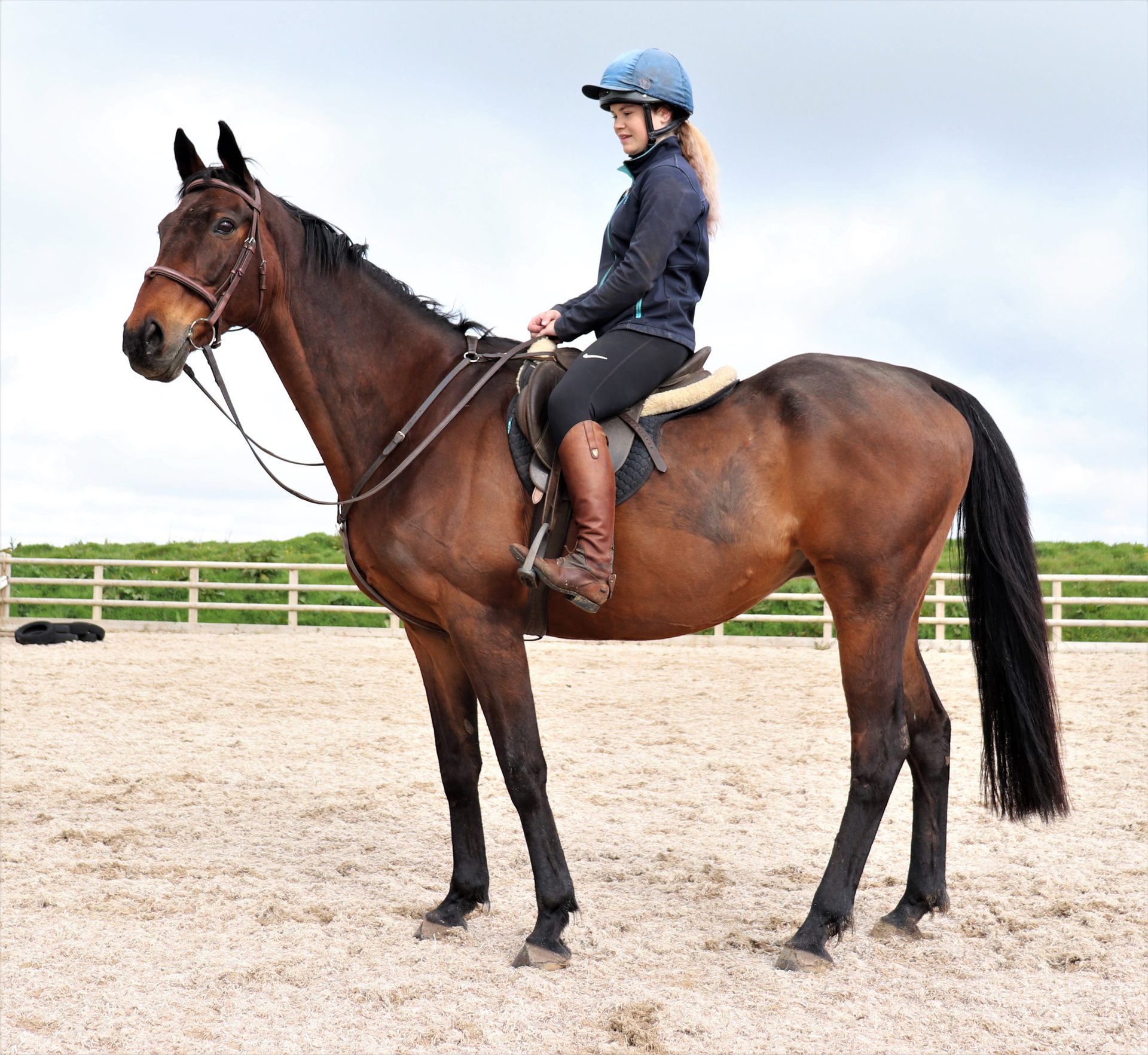
A former racehorse and rider working in the school at Racehorse Relief

How it works

Three ways to leave a gift.

When you make or update your will, your solicitor will ask how you’d like to leave a gift to charity. There are three common forms:

A residuary gift

A share (or all) of whatever is left in your estate after other gifts, debts and any tax have been settled. This is the most common form — it stays proportionate to your estate, whatever happens to its value over the years.

A pecuniary gift

A fixed sum of money — for example, £1,000 or £10,000. Straightforward, but inflation gradually erodes its value, so it’s worth reviewing every few years.

A specific gift

A particular item or asset — a piece of property, a vehicle, jewellery, or in our case very occasionally a horse with provision for its ongoing care. Specific gifts need more careful drafting.

For your solicitor

Suggested wording.

Your solicitor will draft the exact wording, but the following are examples you can share with them:

Residuary gift

“I give [all / a [PERCENTAGE]% share] of the residue of my estate to Racehorse Relief of Vicarage Farm, Underlane, Helston, Cornwall TR13 0EJ (Registered Charity Number 1157554) for its general charitable purposes. The receipt of the Honorary Treasurer or other proper officer of the charity shall be a sufficient discharge to my executors.”

Pecuniary gift

“I give the sum of £[AMOUNT] free of tax to Racehorse Relief of Vicarage Farm, Underlane, Helston, Cornwall TR13 0EJ (Registered Charity Number 1157554) for its general charitable purposes. The receipt of the Honorary Treasurer or other proper officer of the charity shall be a sufficient discharge to my executors.”

Please use our full registered name Racehorse Relief, our registered office at Vicarage Farm, Underlane, Helston, Cornwall TR13 0EJ, and our registered charity number 1157554. These three pieces of information together ensure your gift reaches us exactly as you intend.

A note on tax

Gifts to charity reduce Inheritance Tax.

In England and Wales, anything you leave to a registered charity is free of Inheritance Tax. If you leave 10% or more of your taxable estate to charity, the IHT rate on the rest of your estate falls from 40% to 36%.

Your solicitor or financial adviser can walk you through what this means for your particular circumstances. We are not able to give tax advice ourselves, but we are happy to confirm any information about us that they need.

A confidential conversation

If you’d like to talk.

Some people prefer to think about a legacy on their own, with their solicitor. Others would rather have a quiet conversation first — about the charity, about how a gift might be used, or simply to put a face to the name.

If that’s you, please get in touch. Conversations are confidential, and there is never any pressure to commit to anything. The point of the conversation is your peace of mind.

Get in touch

Thank you

From all of us, and from the horses we haven’t met yet.

Many of the horses currently on the yard arrived because someone, somewhere, made a decision years ago that there should still be a place like this. A legacy gift is that decision — quietly made, lasting a long time.

Whatever you decide, thank you for considering us.